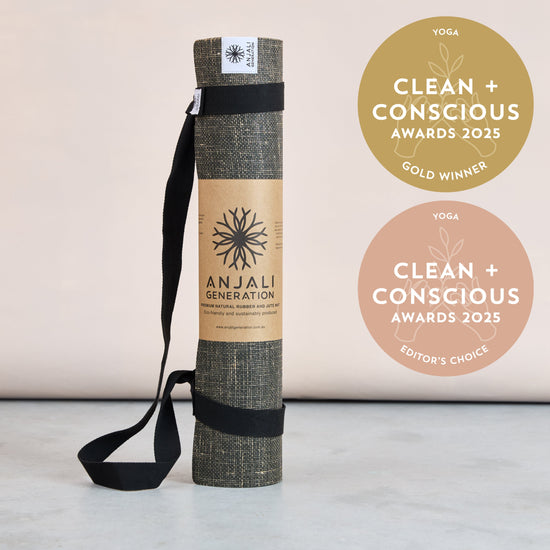


Yoga practitioners often spend a lot of time thinking about the quality of their practice — the breath, the movement, the attention we bring to the body.
But fewer people pause to think about what the mat itself is made from.
Most yoga mats today are produced from synthetic materials. Some contain PVC, others various foams or plastics designed to maximise grip and cushioning. While these materials can perform well, they also tend to be heavily processed and sometimes toxic.
For people looking for something closer to natural materials, a combination of jute fibre and natural rubber offers an interesting alternative.
The Role of Jute
Jute is a plant fibre that has been used for centuries to make ropes, sacks, carpets and textiles. It comes from the fibrous stalks of the jute plant and is valued for its strength and durability.
When used in a yoga mat, jute fibres create a lightly textured surface. Many practitioners find that this texture provides a natural sense of grip, particularly as the mat warms during practice.
Because jute is a plant fibre, it is also renewable and biodegradable, which makes it attractive to people trying to reduce their reliance on synthetic materials. Jute has the added benefit of being easily cultivated without the use of pesticides.
Why Natural Rubber Matters
On its own, woven jute would not make a comfortable or stable yoga mat. This is where natural rubber plays an important role.
Natural rubber, derived from the sap of rubber trees, provides the qualities a yoga mat needs:
cushioning
stability
weight so the mat stays flat
strong contact with the floor
When jute fibres are embedded into natural rubber, the two materials complement each other.
The rubber provides the structure and grip against the ground, while the jute contributes texture and durability on the surface.
A Material Balance
This combination creates a mat that feels different from many synthetic alternatives.
Rather than a uniform plastic surface, the mat has a subtle textile quality from the jute fibres. At the same time, the natural rubber base provides the support needed for standing poses, balance work and longer practices.
The result is a mat that sits somewhere between traditional natural fibres and modern performance materials.
Considering the Environmental Impact
People looking for environmentally thoughtful yoga mats often encounter materials like cork or natural rubber. These can be good options, but jute adds another interesting dimension.
Jute plants grow quickly and generally require relatively little pesticide input. The fibre can be harvested and processed with comparatively low energy.
When combined with natural rubber, the result is a yoga mat built largely from plant-derived materials rather than synthetic plastics.
While no manufactured product is impact-free, this combination can appeal to practitioners trying to move toward simpler and more natural material choices.
A Quiet Return to Natural Materials
Yoga originally developed using very simple practice surfaces — woven grass mats, cotton cloths, or even bare earth.
Modern yoga mats are inevitably more engineered, but materials like jute and natural rubber retain a connection to those older traditions.
They remind us that sometimes the most satisfying materials are not the most technologically complex, but those that come directly from the natural world.
About Anjali Generation
At Anjali Generation, our High Performance Jute yoga mats are made using jute fibres embedded in natural rubber, combining the durability of plant fibres with the stability and cushioning that yoga practice requires. Our aim is to create mats that feel grounded in natural materials while still supporting modern practice.
This article was written by the team at Anjali Generation, an Australian brand producing eco-friendly yoga mats made with jute fibres embedded in natural rubber.